-

“Two dreams and a cup of coffee later…..”
F.K. PrestonKopi Time
-
Change the way you look at things and the things you look at change

A question, or maybe more aptly described as a question of process, was the focus of Becca’s Write on Wednesday this week. “Are you in the process of revision? How is it going?”
Becca proffered a variety of revision styles, and I could see bits of myself here and there. Stephen Dixon said,
I start on the first page. Then, I rewrite that page twenty or forty times until it’s right, and then it’s finished. Then, I go to page two and I do the same thing twenty or forty times.
Kent Haruf’s style is,
I polish as I go along. My habit is to perfect individual sentences, individual paragraphs, and individual pages, and when I think they’re as good as I can make them, I feel free to go on to the next part. So when I write the last sentence of the last paragraph, I’m done with the book.
I have been re-reading Anne Lamott’s Bird by Bird the past week. She talks about when she knows she has to be done with the revision process, and describes it as “putting an octopus to bed.”
[It’s]…the process of solving various problems in your final draft. You get a bunch of octopus’s arms neatly tucked under the covers – that is, you’ve come up with a plot, resolved the conflict between the two main characters, gotten the tone down pat – but two arms are still flailing around. Maybe the dialogue in the first half and the second half don’t match, or there is that one character who still seems one-dimensional. But you finally get those arms under the sheets, too, and are about to turn off the lights when another long sucking arm breaks free….
Then, even though all the sucking disks on that one tentacle are puckering open and closed, and the slit-shaped pupils of the octopus are looking derisively at you, as if it might suck you to death just because it’s bored, and even though you know that your manuscript is not perfect and you’d hoped for so much more, but if you also know that there is no more steam in the pressure cooker and that it’s the very best you can do for now—well? I think this means that you are done.When I attempted the NaNoWriMo (National November Writing Month – other wise know as bust a gut writing a book in one month) this past fall, I wrote at 172 mph and didn’t go back to look at a thing. That’s the advice they give you at the beginning of November. It was an interesting way for me to write, and after a while, I found it quite freeing. I still haven’t gone back to look at the manuscript, it’s probably all trollop in need of GREAT revision, but it was a fun process. It was different because I usually write fairly slowly. Write a chapter, go back and make some changes, plodding forward at the speed limit. When the whole thing is done, I go back and edit it four or five times, looking for that sublime description, cutting out huge swatches of unnecessary stuff, agonizing over the search for the perfect word. That is my style for fiction writing. For non-fiction stuff – class work and the like – I just take a warm washcloth and give the piece a quick swipe.
In a much broader application, I am in the process of revision. I mean me, not something I am writing. I do this every year around my birthday. This is taking stock time: what have I accomplished in the last year, where am I headed without thinking about it, where could I use some polishing? What new goals could I aim for? What might be interesting to try?
I celebrate my birthday – myself – for at least a week. I take one day off of work just for the fun of it. I start a new class, make a doctor or dentist appointment, connect with an old friend I haven’t spent time with in a while, and I make plans for the coming year. One year I invited all of the most important women in my life to have lunch together. Friends and relatives, neighbors and co-workers. They had all heard about each other, but many had never met before. It was a lovely party – we celebrated relationships, the importance of cherishing each other, and ourselves.
I never worry about dreaming too big. I don’t know who said it, but I read somewhere, “If you don’t create change, change will create you.” I like to have as much control as I can. So I am all for creating change.
This year’s start to the “revision of Qu” list:
- Try yoga (I signed up for a class that starts my birthday week).
- Build a cabin (I mean, literally, me – not have someone else build it – research of pole buildings is in process.)
- Spend a month in Bali (leaving my family for this long will be a huge stretch for me).
- Write a new story (almost done with the final edit – I promise – of the current work in progress).
- Stay with the better health program started at the beginning of the year (more exercise, less meat and sugar – so far so good).
The next couple of days I will continue to add ideas to the list. Who knows what I might accomplish? Along with the quote for the title of this piece, Wayne Dyer said,
I’m here on purpose, I can accomplish anything I desire, and I do it by being in harmony with the all-pervading creative force in the universe.
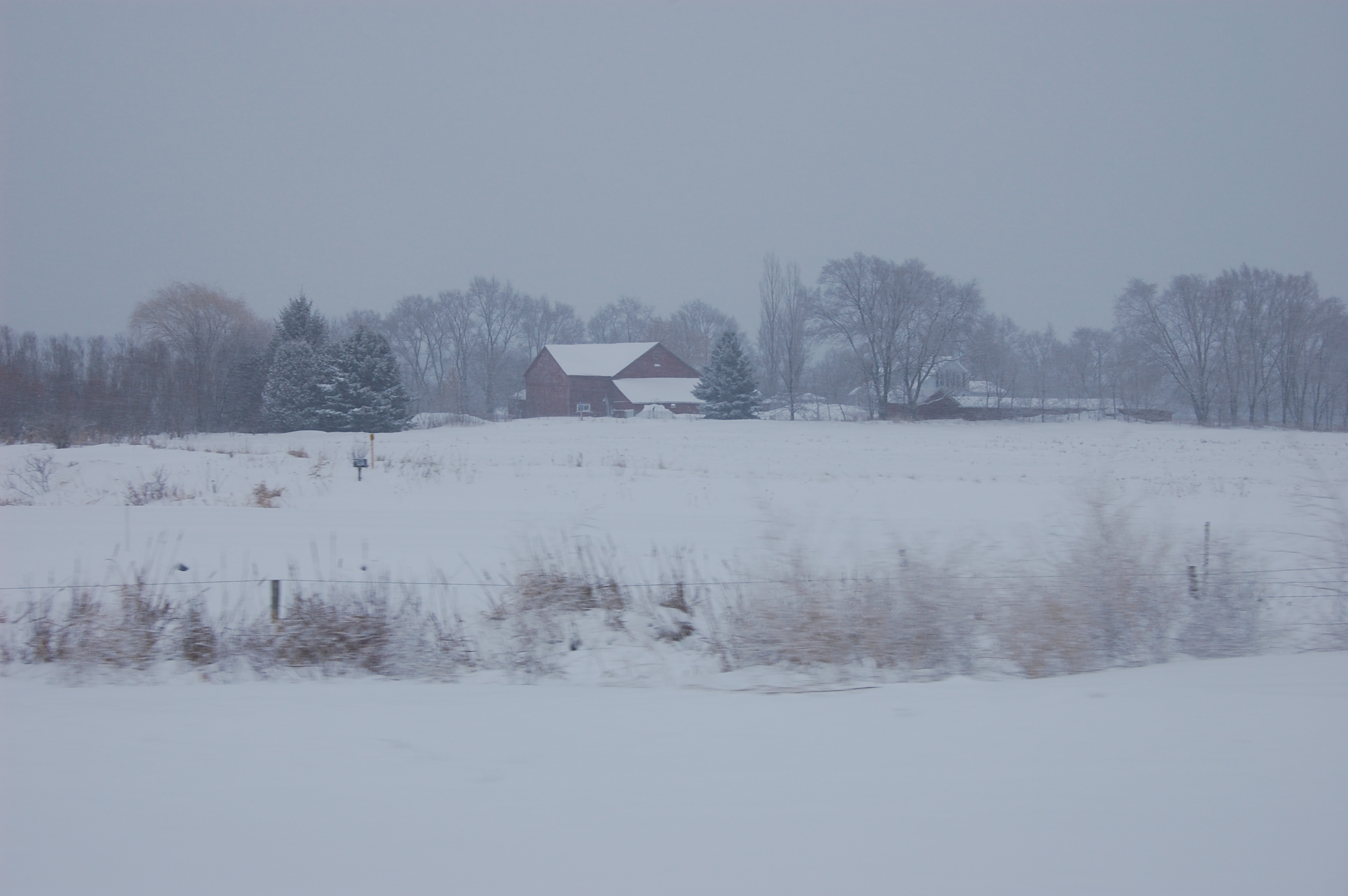
And it is still winter.
-
old man’s war by John Scalzi
The inspiration for me to read this book came from Stainless Steel Droppings: SciFi Experience 2009. I don’t read much science fiction any more, but I figured I would go with the mood this month. I am so glad I did. Otherwise, I probably would never have read Old Man’s War. I was sufficiently pleased with it to immediately read the second in the series, The Ghost Brigades. I was pleased and inspired enough by that to name the new puppy in our house Zoe, and to put the third and fourth in the series, The Last Colony and Zoe’s Tale, on hold at the library.
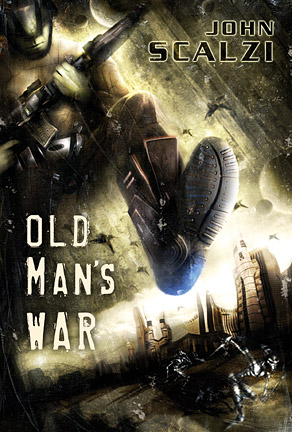
Old Man’s War starts out in a world I could recognize, which really made the segue into the science fiction part of it an attractive and realistic possibility for me. The first sentence in the book is, “I did two things on my seventy-fifth birthday.” How could you not continue at that point?
The basic story is that humans have discovered the method of interstellar space travel: skip drive. Humans have also discovered that we aren’t “the only ones” out there, and planets we can live on are attractive to inhabitants from other worlds. Thus, we have to fight to take them and make them colonies, and fight to protect the colonies once we have them.
So on John Perry’s seventy-fifth birthday:
First he visited his wife’s grave. Then he joined the army. Far from Earth, the war has gone on for decades: brutal, bloody, unyielding. Earth itself is a backwater. The bulk of humanity’s resources are in the hands of the Colonial Defense Force, which shields the home planet from too much knowledge of the situation. What’s known to everybody is that when you reach retirement age, you can join the CDF. They don’t want young people; they want people who carry the knowledge and skills of decades of living. You’ll be taken off Earth and never allowed to return. You’ll serve your time at the front. And if you survive, you’ll be given a generous homestead stake of your own, on one of our hard-won colony planets. John Perry is taking that deal. He has only the vaguest idea what to expect. Because the actual fight, light-years from home, is far, far harder than he can imagine-and what he will become is far stranger. (Review from my library’s catalogue.)
The concept of what makes a human being is really stretched and reshaped in this story. There are actually all different kinds of “humans”, which makes for interesting philosophical discussions.
I would definitely recommend this book if you have even a mild interest in science fiction. I enjoyed the second in the series, too, but it got a little too scientific for me, so I probably won’t review it. You can read Carl’s review of Old Man’s War here, and a review of Zoe’s Tale here.
And here is our Zoe:
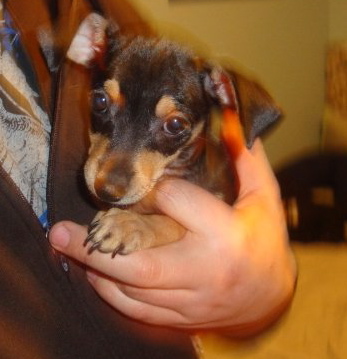
John Scalzi also has a great blog, called Whatever. I think you should check it out – he talks about his cats, his daughter, and books, and music, and Barack Ohama, and etc. like he’s a real guy! Very refreshing, and a great sense of humor.
-
Awards, Blogging, and Lily River
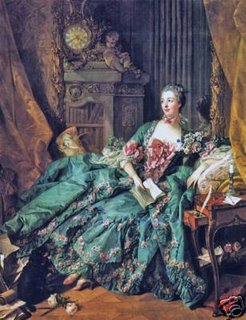
Awards day at So Many Books, So Little Time. I was so touched to receive these wonderful commendations from two fabulous bloggers. Jeanie at Marmelade Gypsy, who is the most affable blogger I know, sent me the Marie Antoinette Award for “being an inspiration in our little creative/blogging world.” Thank you, Jeanie.
And from Becca at Bookstack, the Premios Dardo Award, which recognizes “the effort to transmit cultural, ethical, literary, and personal values every day. These stamps were created with the intention of promoting fraternization between bloggers, a way of showing affection and gratitude for work that adds value to the Web.” Becca has built warm affinity in the writer’s corner of blog-land, and introduced me to many like souls. Thank you, Becca.
It is hard to pass this on to just a few people, and I know that many of the sites I frequent have already received these awards. I will, instead, direct you to my blog roll. I have updated the list with many I visit often but had neglected to include here, and I have removed obsolete links. If you don’t already, please visit all of them.
I want to extend my appreciation to all the readers who drop in here. I appreciate the conversations, short or long, and look forward to chatting with you and visiting your posts. This blog has a second anniversary coming up in March. I have plans for a St. Patrick’s Day advent style calendar for a couple weeks, in celebration of both events. I think I will tell the story of Qugrainne then.
Postscript: I visited Lily River yesterday. I saw numerous animal tracks, listened to the birds, and snow shoed on the frozen river, picturing the fish and frogs sleeping under the ice. The following is a little photo journal of a lovely day.
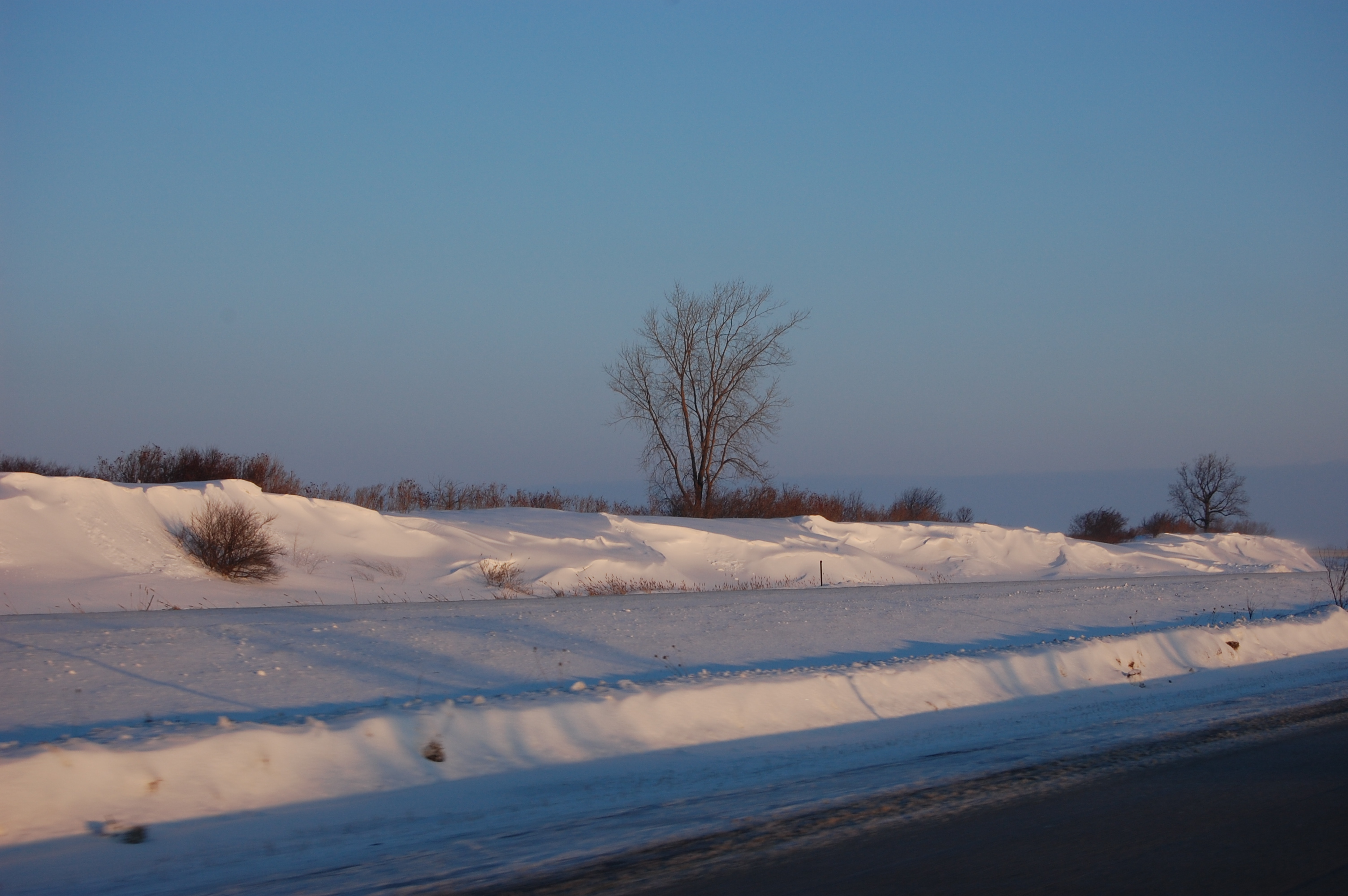
Is there anything more beautiful than wind sculpted, blue snow?
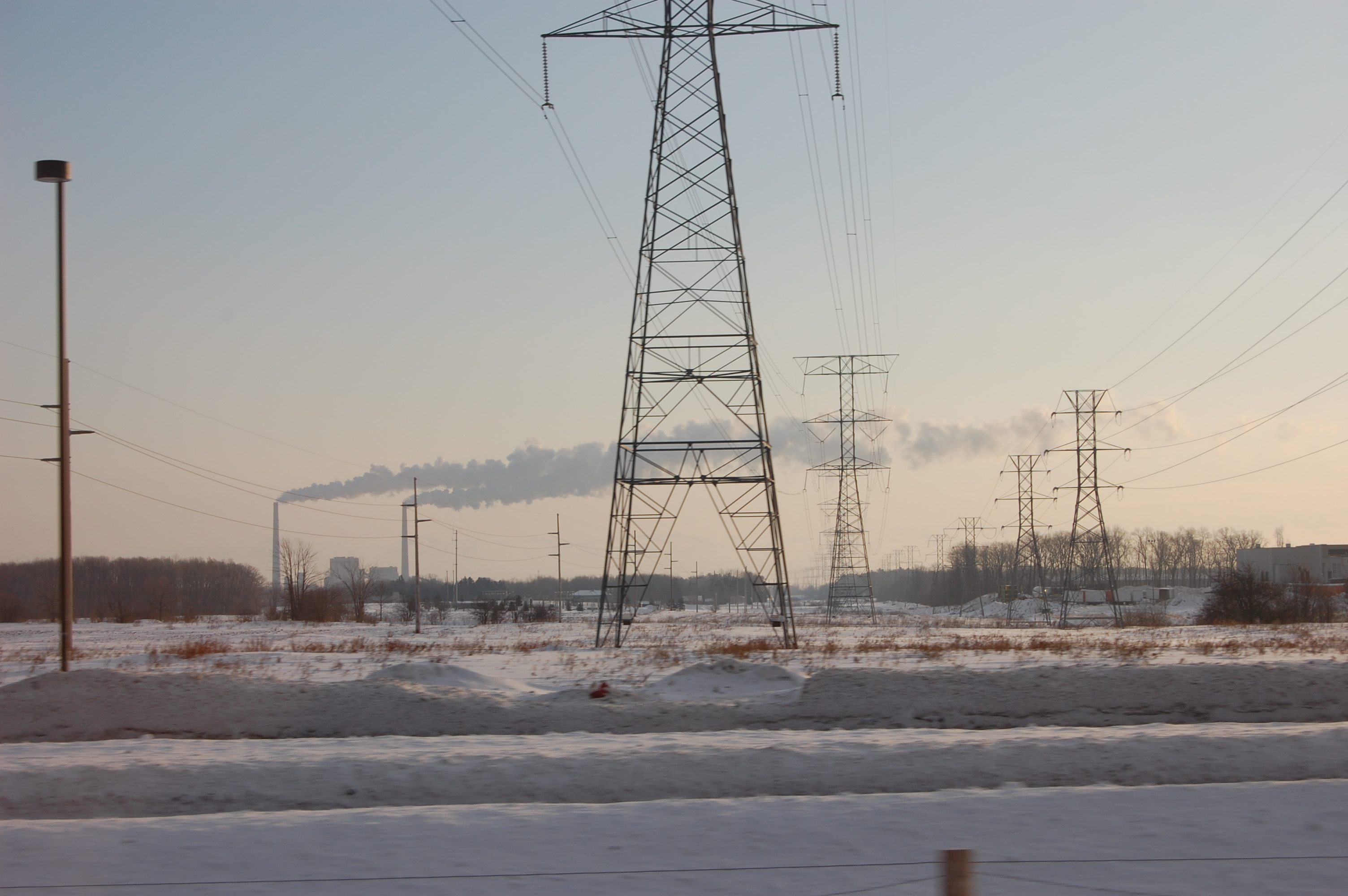 Port Washington Nuclear Power Plant: what we need to get away from!
Paper mills on Green Bay: another thing we need to get away from.
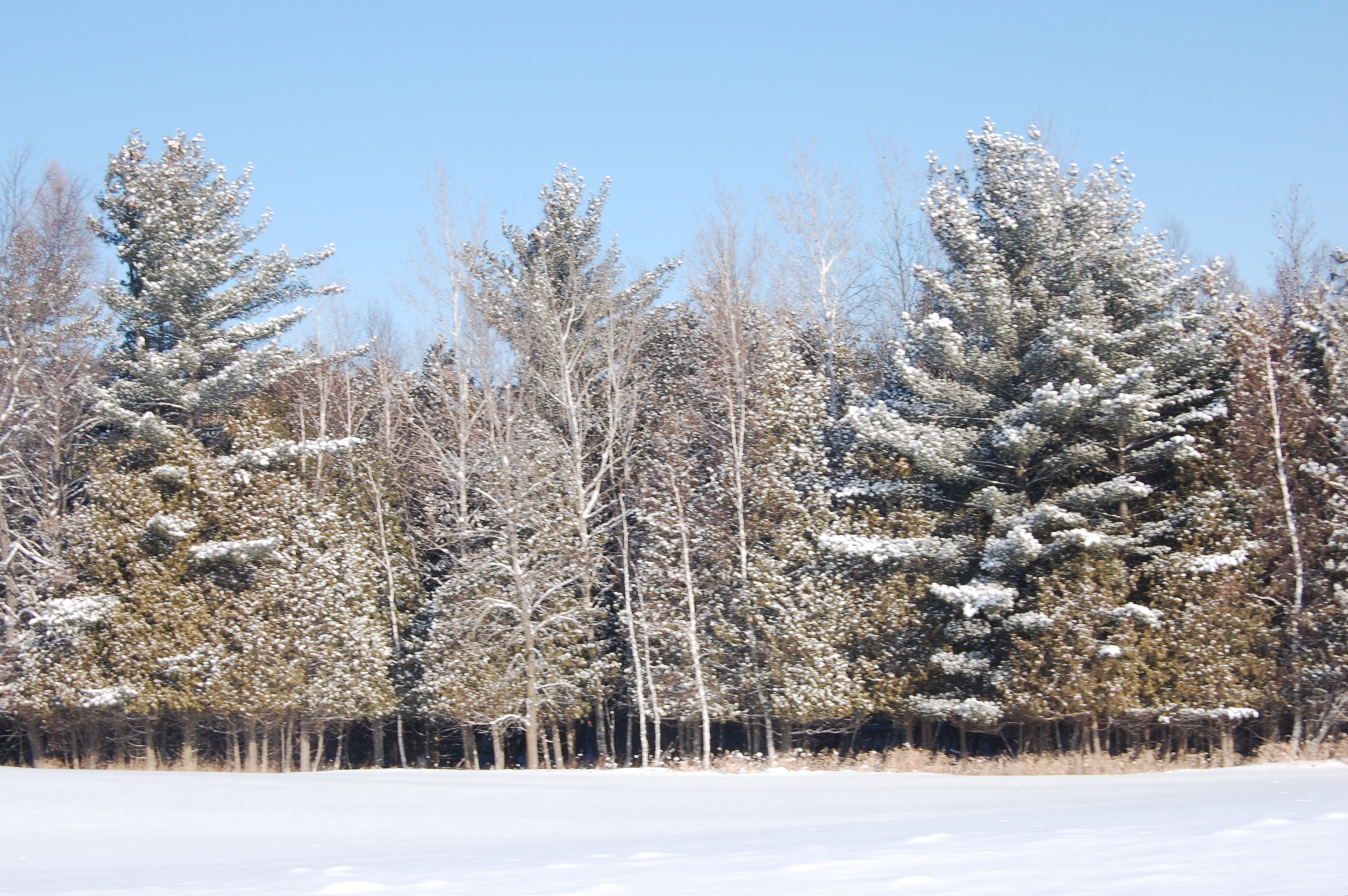
Ahhh. Entering Chequamagon-Nicolet National Forest.
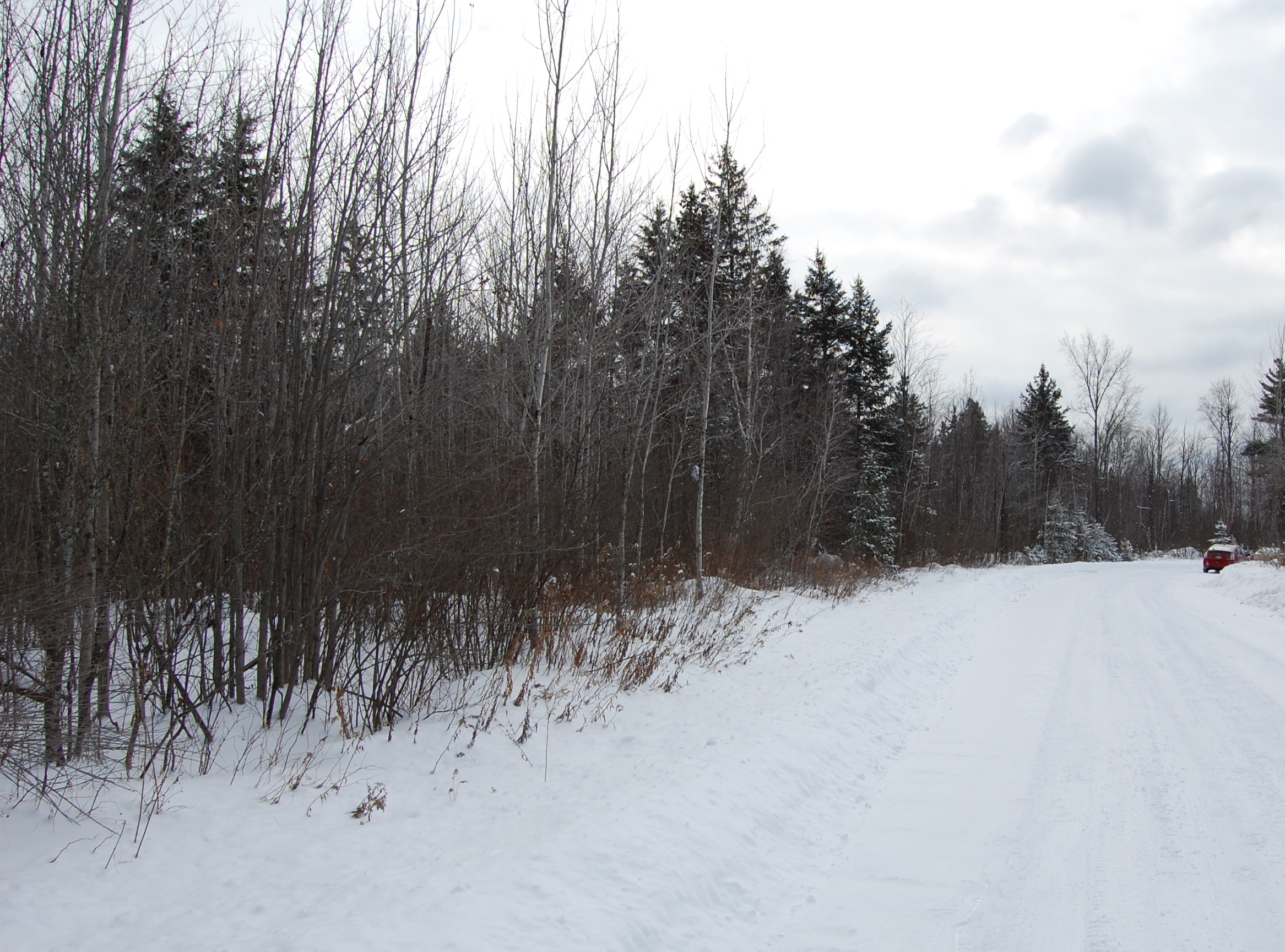
Northern edge of property
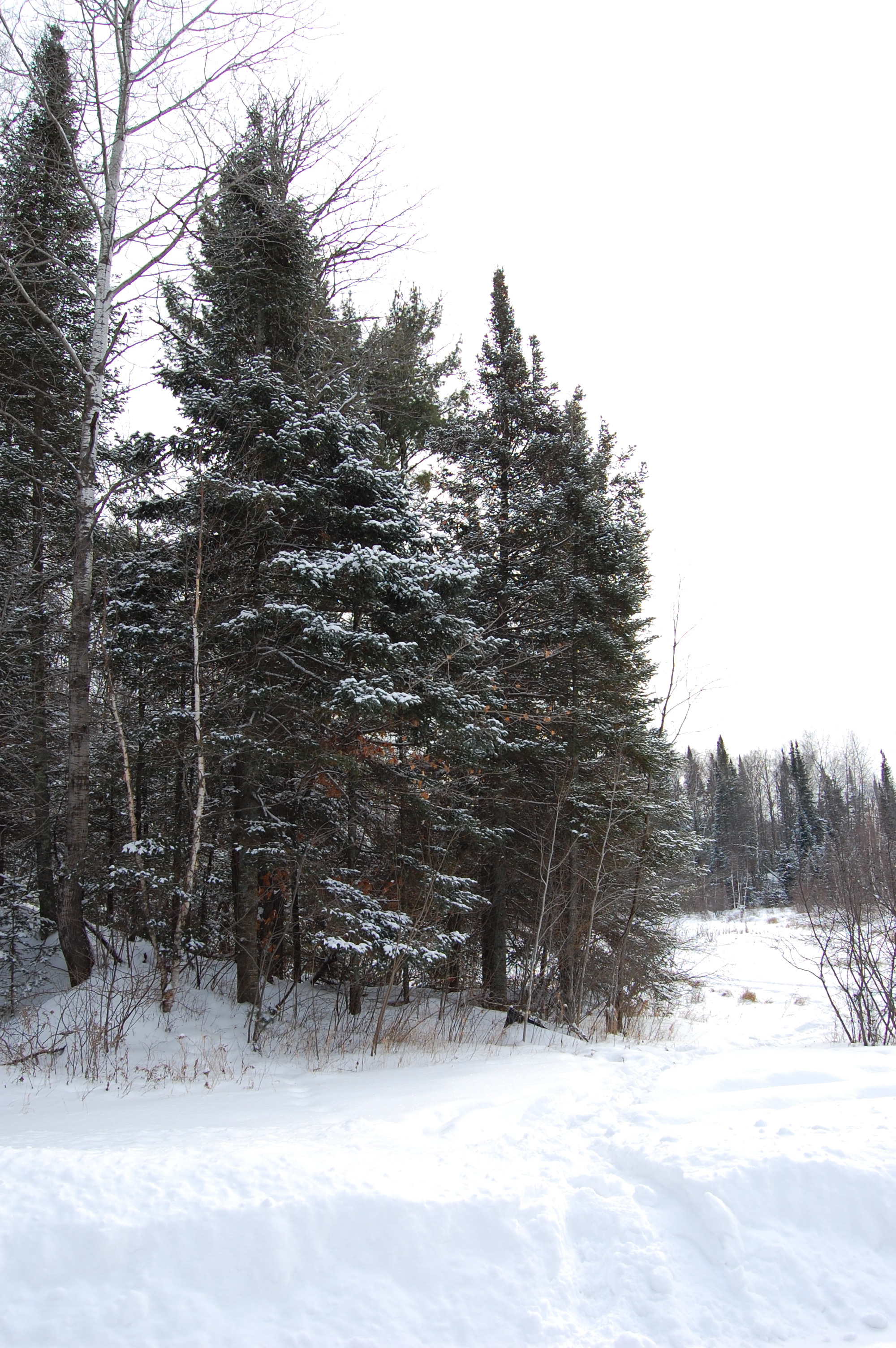
Northwest corner.
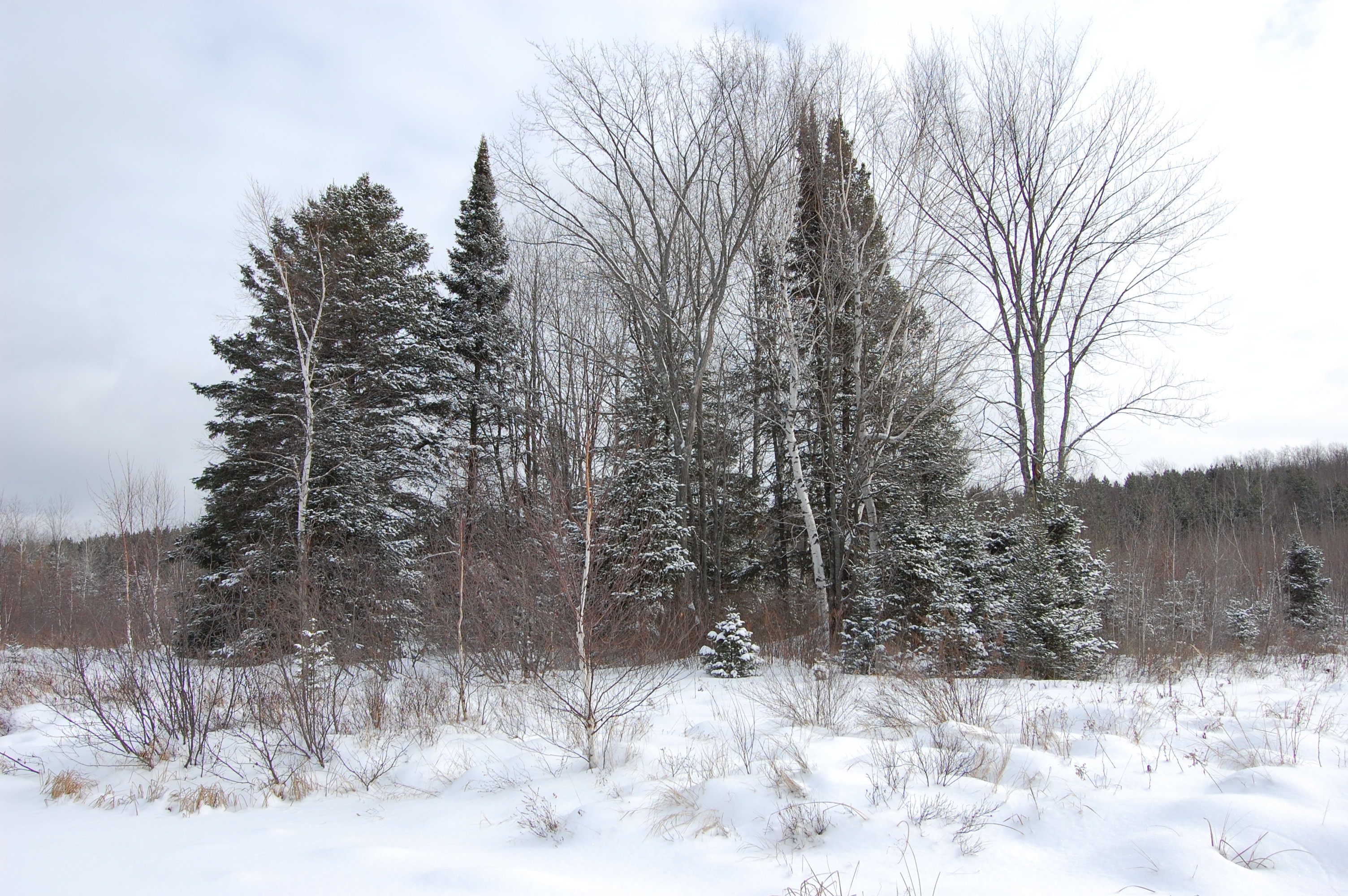
Island: perfect spot for a tree house.
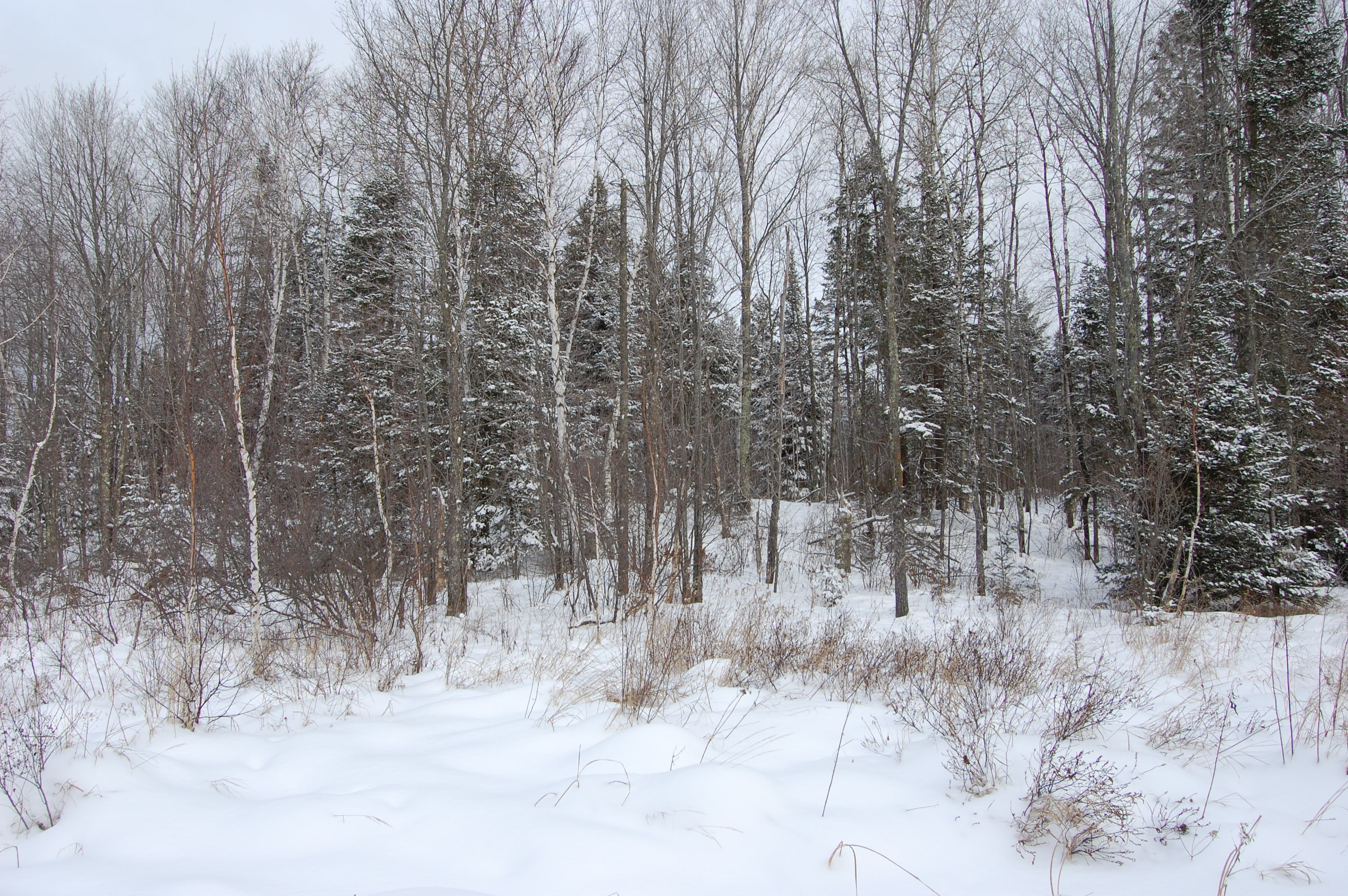
Birch, pine, oak, maple, and ?? we shall see in the spring when the leaves are out.
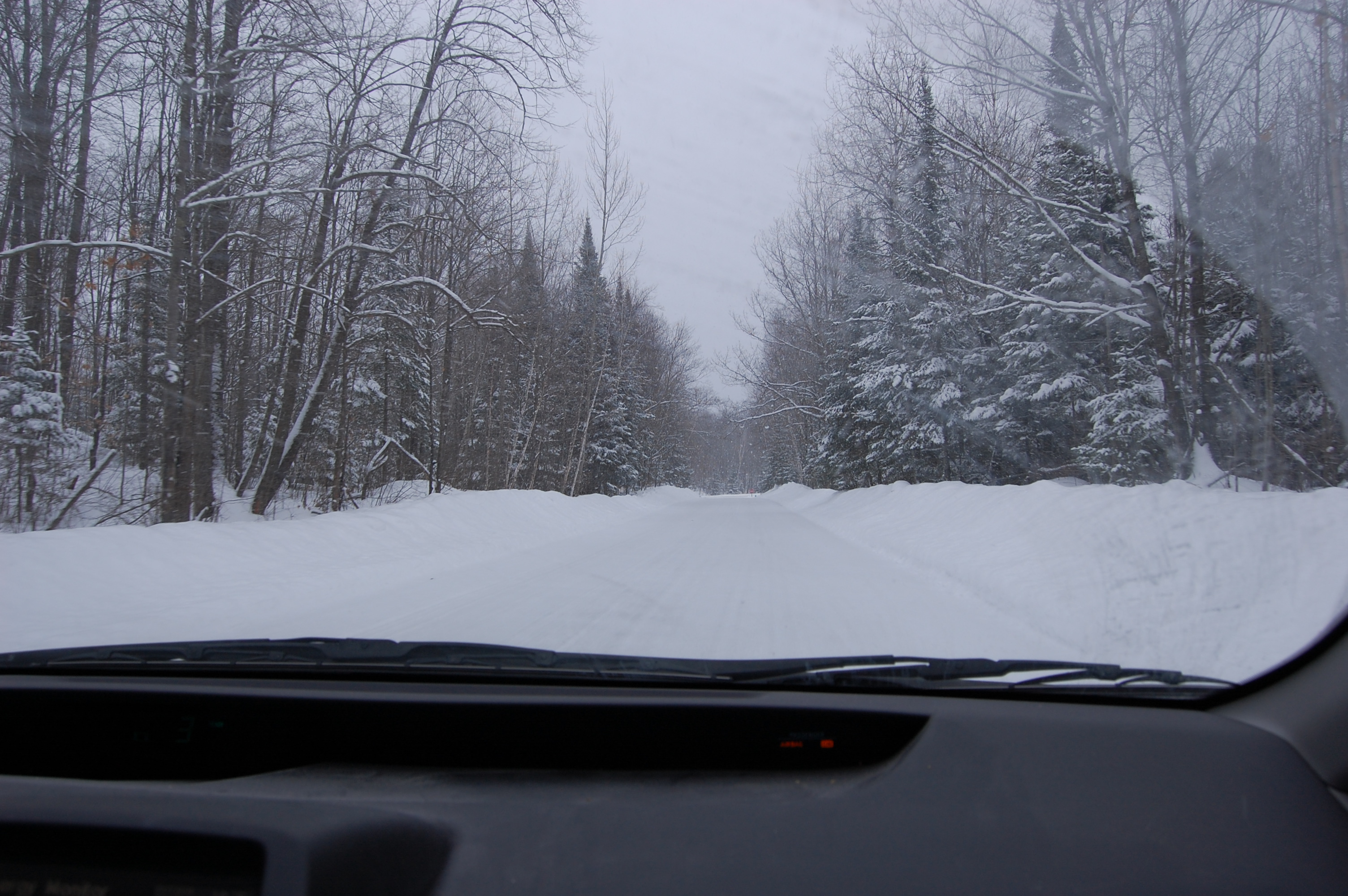
It snowed (again!) on the drive home. Back to reality.
-
write on wednesday, and some inspiration
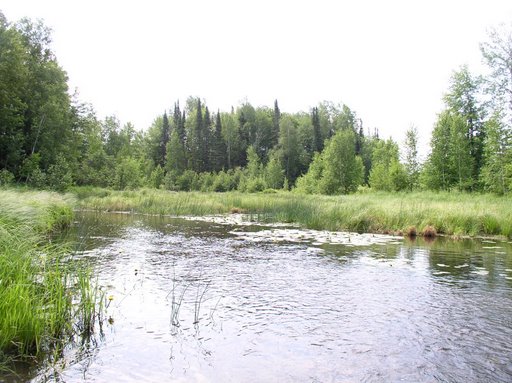
Inspirational place
This week Write on Wednesday was a list of questions from Becca. My first interview!!
How often do you get writer’s block?
Never. Probably because I am always ready to switch assignments. If I can’t seem to move forward on one thing, I’ll pull out something else to work on. There are always a couple items on my list of work in progress, so it’s easy enough to do, which answers the next question, too.
How do you fix it?
Do you type or write by hand?
Both, but mostly type. I have a hard time maintaining organization when I write by hand. I might have six or eight notebooks floating around, and the right one is never in the write place at the write time. I do enjoy hand writing. I notice my thought process is slowed down and I come up with more ideas, there is probably more description, conversation – the writing is simply longer. Is that a good thing or a bad thing? This may be an “ah ha!” moment. I will have to take a look and compare.
Do you save everything you write?
Unfortunately, yes. Boxes of stuff, going back to high school. Once in a while I will pull something out and read it, and CRINGE! Thanks goodness I am not that person anymore! It would probably help the lack of organization thing mentioned above, if I would throw more things away.
Do you ever go back to an old idea long after you abandoned it?
I am quite attached to my precious ideas. It is likely I will go back to something.
Do you have a constructive critic?
I share with lots of people. They all offer different responses to my writing, which run the gamut of stroking to grammatical hand slapping. They are all helpful.
Did you ever write a novel?
Oh my, that is a long sad story. Short answer, yes. Long answer: It took five years of long, hard and angst ridden labor to write that first mystery. I printed it. Went on to write a sequel, which was ¾ completed, and rather better than the first. Didn’t print it. At the same time, wrote a young-adult fantasy. Printed rough draft, and went on to complete a couple edits. Didn’t print it. Computer stolen. Oh well. Says something for hand writing, doesn’t it?
What genre would you love to write but haven’t?
Why not do what you would love to do?
What’s one genre you have never written, and probably never will?
I wrote some poetry before I was thirteen. I won’t do that again!
How many writing projects are you working on right now?
One for a class (not a writing class, however), one for me, and one blog. Thinking about starting something new, soon.
Do you write for a living? Do you want to?
No, and yes. A dream I am working towards.
Have you ever written something for a magazine or newspaper?
No and no.
Have you ever won an award for your writing?
No.
What are your five favourite words?
“I’d like to represent you.”
Do you ever write based on your dreams?
I think they probably sneak in there. All of my writing filters down from my subconscious, which is also where dreams originate, so the answer must be yes. I don’t usually remember my dreams unless I lay in bed when I wake up and really think about it. I don’t often have the luxury of that time.
Do you favour happy endings, sad endings, or cliff-hangers?
Variety is the spice of life!
Have you ever written based on an artwork you’ve seen?
Only for school. Are you asking about writing something fiction, using the artwork as a prompt? I haven’t done that.Well, this was a fun interview. Gave me some things to think about. I can’t write a post without some pictures though.
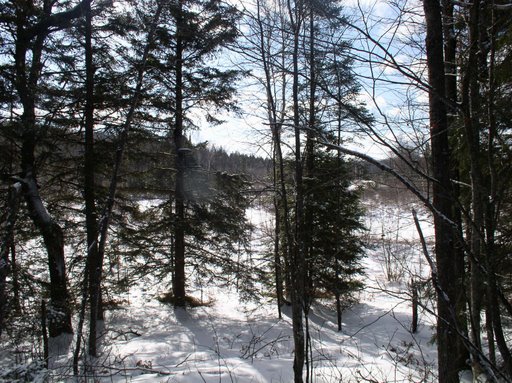
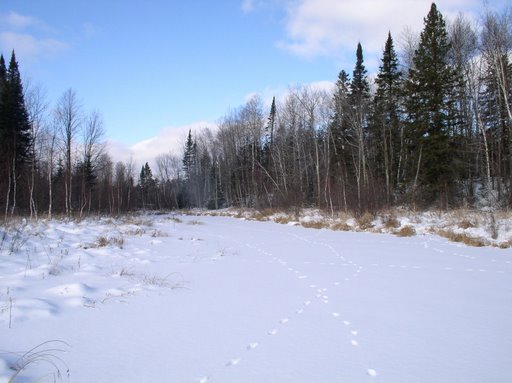
I have just bought some land in northern Wisconsin, in a very unpopulated county with lots of National Forest. I plan to write about it later. Here is a sneak preview -a picture from summer is the first photo posted above.
-
The Lady in the Loch – Elizabeth Ann Scarborough
January has been Science Fiction month, due to Carl’s encouragement at Stainless Steel Droppings – and The Sci Fi Experience 2009, which will run from January 1st through February 28th, 2009. Inspired by the Carl’s reviews of John Scalzi’s work, particularly Old Man’s War, I decided to plunge into another world. Trying to find a day the library was open between the Christmas closings and the New Years closings was a challenge in itself! I did eventually find the book I sought on the Science Fiction shelf at Milwaukee’s wonderful, downtown library. On the shelf, next to Scalzi, was Scarborough. Such a lovely Scottish name, I pulled that book from the shelf too, and discovered The Lady in the Loch. The setting, the title, the author Elizabeth Ann Scarborough (a Nebula winner), and the cover (by Jean-Yves Kervevain), sold me. I brought the book home.
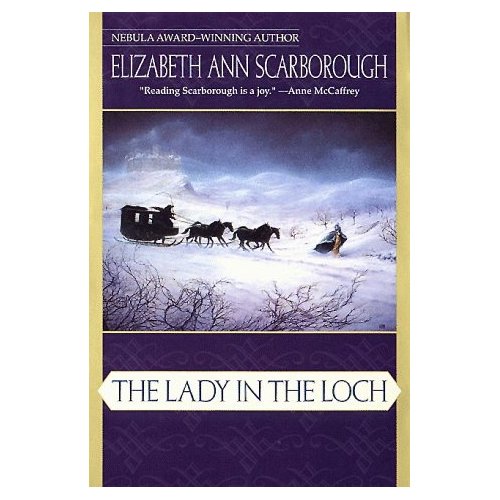
First, I have to say in my opinion the fact the author was a Nebula winner is the reason the book found its way to the Science Fiction shelf. The Nebula, given annually by the Science Fiction Writers of America, acknowledges excellence in science fiction writing. Scarborough won the Nebula for The Healer’s War, which draws on her experiences as a nurse in Vietnam. The Lady in the Loch is more of an alternate-history fantasy/mystery novel, and I don’t see it fitting in the Science Fiction niche in any way.
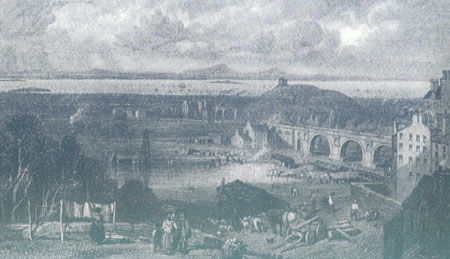
The Draining of Nor Loch to build the new town
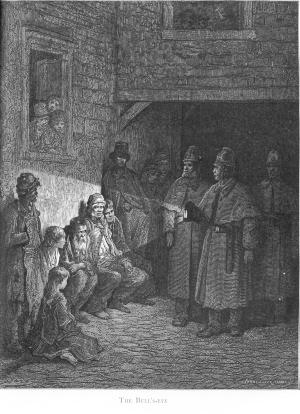
Set in 18th century Scotland, the story is primarily seen through the eyes of Midge Margret, a young woman who has escaped an abusive husband and gone back to her family, an itinerant gypsy group. They have come to Edinburgh to beg a living during a particularly hard winter. Midge is befriended by the young Walter Scott, when he is scouring the countryside searching for the “old songs” sung by native people. They meet again when he, in his role as sheriff of Selkirk, investigates the death of a young woman whose bones are found in the dredged Nor Loch. A young gypsy maiden is kidnapped, and then another. Midge Margret and Walter Scott, each in their own way, approach the secret behind the disappearances, and soon find themselves up against a demented necromancer.
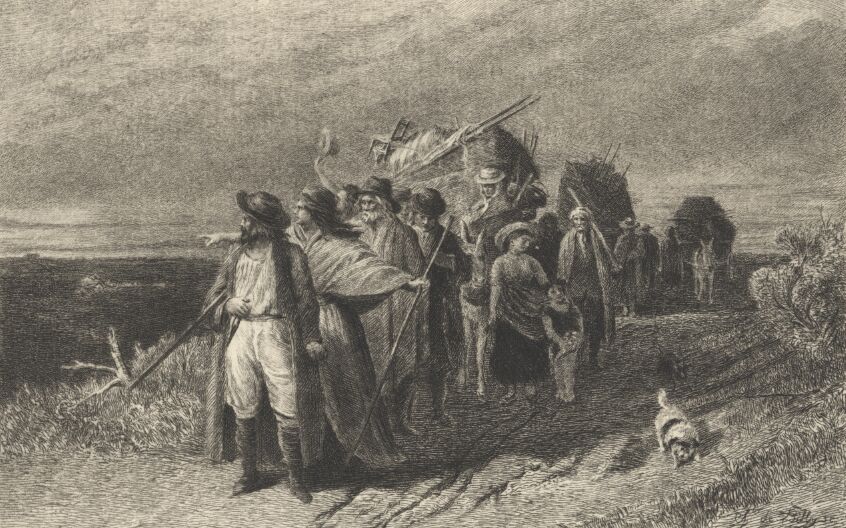
The Departure of the Gypsies
Drawn by Clark Stanton, Etched by C. de Billy
Illustration taken from Sir Walter Scott’s The AstrologerScarborough has done an excellent job of researching her setting. The descriptions of Edinburgh, the gypsies’ lifestyle, Walter Scott and his associates, are very well done. The fantasy and horror elements based in Scottish folklore are also well done. Much of the speech is given in Scots dialect, which adds to a realistic atmosphere.
If you enjoy alternate-history fantasy mystery borderline science fiction novels, I recommend this book to you!

About Me
The sky is not completely dark at night. Were the sky absolutely dark, one would not be able to see the silhouette of an object against the sky.
Follow Me On
Subscribe To My Newsletter
Subscribe for new travel stories and exclusive content.
 ...Kopi Time